


Interior design trends in 2025 have taken a refreshing turn. Homeowners are leaning toward warm minimalism, textured fabrics, and earthy tones. Instead of doing full renovations, many are updating their living spaces through smaller details.
As the season shifts toward the cozy end of the year, decorative pillows are taking an even bigger role in home décor. They soften furniture, express personal style, and tie a room together without overwhelming the space.
But many people still struggle with one simple question: how do you mix and match pillows without making the sofa look mismatched or overly coordinated? And why do some sofas look effortlessly styled while others look like the pillows had a disagreement?
The good news is that mixing pillows is not complicated. A few clear principles make the entire process easier and much more enjoyable.
This guide breaks down everything you need to know about patterns, pillow sizes, color combinations, and styling techniques that complement both your sofa and your living space.
Throw Pillows: The Starting Point of Sofa Styling
Throw pillows are one of the easiest ways to refresh a sofa without replacing any furniture. They are flexible, affordable, and instantly change how a room feels. Whether you want colorful pillows, contrast, or a more inviting look, they set the base for your styling.
In 2025, removable covers have become even more popular. They let you switch colors seasonally or anytime you want a new palette. With one quick change, a sofa can shift from modern to cozy or from minimal to eclectic.
Throw pillows also help tie a room together. A well-chosen cushion can match your rug, complement your wall paint, or soften the lines of a leather couch. Styled the right way, they add warmth, visual interest, and a more cohesive feel to the space. If you want to explore similar pillow options, you can browse this bedding collection for inspiration.
Matching Throw Pillows Without Making Them Look Identical
Matching throw pillows is not about choosing identical cushions. It’s about creating harmony without making your sofa look staged or overly coordinated.
1. Work Within a Consistent Color Palette
A simple way to keep balance is by choosing colors that complement each other.
-
Warm rooms pair well with clay, beige, terracotta, and brown.
-
Modern spaces look great with geometric prints and velvet textures.
-
Gray sofas benefit from earthy greens or muted purples for warmth.
2. Match Through Shared Elements
Instead of duplicating the same pillow, repeat small design features:
-
Similar fabric textures (linen, cotton, velvet)
-
Comparable stitching styles
-
Patterns with matching scale or tone
These subtle links help the pillows feel connected without looking identical.
3. Let Each Cushion Have Its Own Personality
Think of your pillows as parts of a collection.
They should share a theme, not look like clones.
Repeating one or two visual elements keeps everything cohesive while still giving each pillow its own character.
Style Pillows to Fit Your Sofa and Your Room
Styling pillows is similar to choosing accessories for an outfit. Each cushion adds something different through its color, shape, fabric, or texture. When these elements work together, the entire sofa feels thoughtfully styled.
Start with the sofa itself:
-
Observe the shape and size of your sofa.
-
Sectionals usually need more pillows because they have multiple seating areas.
-
Loveseats look better with fewer cushions so they don’t feel crowded.
Consider the sofa material:
-
Leather sofas benefit from softer textures like linen or velvet.
-
Fabric sofas can support bold patterns and heavier textures without feeling overwhelming.
Mix textures for a cozy, layered look:
-
Linen adds a relaxed, airy feel.
-
Velvet brings warmth and depth.
-
Woven fabrics introduce natural character.
-
Smooth cotton balances the overall texture mix.
-
Blending these creates a more personalized and inviting sofa.
A small reality check:
-
Pillows will slide the moment someone sits, but choosing the right textures at least makes them slide a little less.
When you style with intention, your sofa complements the rest of the room and adds comfort without losing visual harmony.
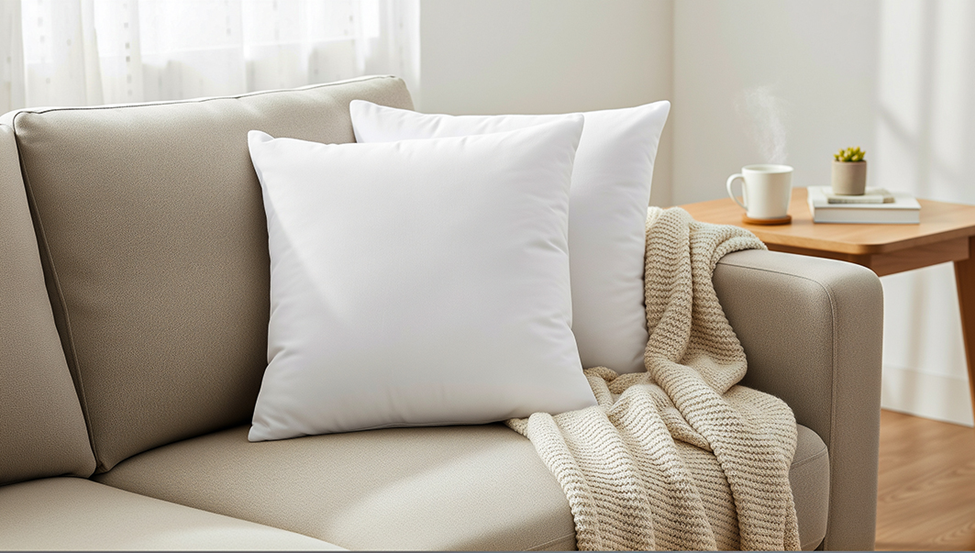
Pillow Patterns: Choosing Prints That Work Together
Pillow patterns can completely change how your sofa looks, especially when you mix them intentionally. Many people avoid combining prints because they fear the sofa will look too busy, but the right mix creates balance and visual interest.
When choosing prints, think about your sofa color and the mood of your room. High-contrast prints create a dramatic look, while softer patterns support a cozy, relaxed feel. If a print feels too loud, pair it with a solid cushion. If something feels too subtle, place it next to a bold cushion so it stands out.
A simple pattern formula makes everything easier:
• One bold pattern - Strong florals, abstract motifs, or striking geometric prints that instantly stand out.
• One medium pattern - Stripes, checks, or repeated shapes that add movement without overpowering the look.
• One subtle pattern - Textured solids, fine stitching, tiny dots, or woven fabrics that tie the whole arrangement together.
This three-part method balances boldness with softness. The bold pattern adds personality, the medium pattern adds structure, and the subtle pattern brings calmness.
For fuller, elevated cushions, explore gusseted pillows that hold their shape better. You can learn more about them here: What Is a Gusseted Pillow? Benefits and How to Choose.
Matching Pillows for Balance, Visual Harmony, and Better Home Décor
Balance is one of the most important elements when styling pillows. Even when you mix patterns, textures, and shapes, the cushions should feel connected and distributed evenly across the couch. When the layout feels symmetrical but still relaxed, the entire seating area looks intentional.
A simple way to achieve balance is through color repetition. If your room features warm neutrals, repeat those tones across your cushions. If you add accent colors like olive, clay, or muted purple, distribute them across both sides of the sofa to keep the visual weight equal. This prevents one side from feeling heavier.
Designers often use an odd number of pillows because odd numbers create a more inviting, less formal look. Three pillows on one side and two on the other work beautifully on a modern couch or sectional. It creates balance without feeling overly symmetrical.
Balance also means knowing when to stop. Too many pillows can crowd the sofa, and too few can make it feel incomplete. Pay attention to your furniture size. Sectionals can support more pillows, while loveseats look best with fewer cushions.
When pillows are placed thoughtfully, the entire room feels calmer, more cohesive, and visually pleasing.
Pillow Sizes: Creating Dimension Through Scale
Pillow sizes have a big impact on how your sofa looks and feels. Mixing different sizes adds depth and prevents the sofa from looking flat.
Here is a simple size guide:
• Large pillows (22–24 inches)
Create structure along the back of the sofa and act as the base layer.
• Medium pillows (18–20 inches)
Sit in front of the larger pillows and help transition the height and depth.
• Small accent pillows or lumbar pillows
Add personality, movement, and visual contrast to the arrangement.
Using a combination of large, medium, and small pillows creates a natural progression that feels visually balanced. It makes the sofa look full, styled, and intentional without feeling crowded.
Your sofa size also matters:
• Sectionals
Can support more and larger pillows.
• Loveseats
Look better with fewer, smaller cushions to avoid overwhelming the space.
Mixing different sizes helps your seating area feel layered, refined, and thoughtfully styled.
Color Scheme: Creating a Cohesive Look Through Color
Choosing the right color scheme is one of the easiest ways to keep your pillows visually connected to your living space. Color can instantly make your sofa feel calm, modern, cozy, or bold.
Start with a base color already present in your room:
-
Look at your rug, curtains, wall paint, artwork, or even the sofa itself.
-
Pick one main color that already exists naturally in the space.
Choose one or two accent colors to complement it:
-
These accents add personality and depth.
-
Pair them with different textures for even more dimension.
Distribute colors evenly across the sofa:
-
Avoid clustering all bold shades on one side.
-
Spread tones throughout to keep the arrangement balanced and visually light.
Match the color scheme with the mood you want to create:
-
Warm tones (mustard, terracotta, clay) give a cozy feel.
-
Cooler tones (gray, muted blue, soft purple) create a calm, modern vibe.
-
Neutrals work anywhere, especially when mixed with textured pillows for added interest.
For extra inspiration:
-
Explore this helpful guide on selecting the perfect throw pillow to see how different colors work in real rooms.
When your colors complement both the sofa and the room, the entire space looks intentional, cohesive, and beautifully styled.
Conclusion: Create a Sofa That Reflects Your Style
Throw pillows can transform your sofa and set the tone of your room. With the right mix of patterns, pillow sizes, textures, and colors, your seating area becomes a reflection of your personal style. Whether you love an eclectic mix or a calm, minimal palette, the best arrangements are the ones that feel balanced and inviting.
Experiment freely. Remove or add pillows until everything feels right. Even if the pillows shift every time someone sits, a well styled sofa still brings comfort, warmth, and personality to your home.
If you want more inspiration or want to explore pillow styles that complement your décor, you can browse this collection for helpful guides and curated picks.
Frequently Asked Questions
1. How many throw pillows should I put on a sofa?
Most sofas look balanced with three to five pillows. Sectionals can handle more, while smaller couches look better with fewer.
2. Should all the pillows match the sofa color?
No. Choose one color that relates to your sofa, then add accent colors or patterns for a more visually interesting look.
3. What pillow sizes work best together?
A mix of large, medium, and small pillows creates depth. This layered approach keeps the sofa from looking flat.
4. How do I choose the right pillow textures?
Combine linen, velvet, cotton, and woven fabrics to add warmth and character. Mixing textures makes the sofa feel more inviting.